



The Short Answer: An inverter converts DC power from a battery into AC power so you can run appliances, electronics, and tools. A converter changes electrical power into the form your system needs, often converting AC power into DC power for battery charging or adjusting voltage levels. In simple terms, an inverter helps you use battery power to run AC devices, while a converter helps manage power within a DC system.
The difference comes down to what type of electricity is being changed and where each component fits into your electrical system.
What Is an Inverter?
How an Inverter Converts Power
Imagine you are building an RV power system, off-grid cabin, or backup power system. You have a battery bank full of energy, but the device you want to run needs the same type of power it would get from a wall outlet at home.
The battery has the energy, but stores that energy as direct current (DC). Most household appliances and electronic devices use alternating current (AC). An inverter bridges that gap.
A power inverter takes DC power from a battery and converts it into AC power that your equipment can use. This allows you to run household appliances, tools, and electronics without being connected to the electrical grid.
Choosing the Right Type of Inverter
The type of inverter you choose depends on what you plan to run. A pure sine wave inverter produces a clean waveform similar to utility power, making it a good choice for sensitive electronics, computers, medical equipment, and devices with motors. A modified sine wave inverter can work for simpler equipment like basic lights and fans, but some electronics may not operate as well with that type of power.
What Is a Converter?
How a Converter Changes Power
A converter works on a different part of the power system. Instead of taking battery power and creating electricity for household appliances, it helps manage and prepare power for batteries and DC equipment.
Most commonly, a converter changes AC power into DC power. For example, when an RV is connected to shore power, the incoming electricity is AC. The converter changes that power into DC electricity so it can charge the battery bank and operate 12V equipment.
When You Need a Converter
Converters can also adjust DC voltage levels between components. A DC converter may step power from one voltage level to another when equipment requires a different input.
A power converter is useful when your system needs charging or voltage management, but it does not replace an inverter. A converter helps maintain your DC power system, while an inverter lets you use battery power to run AC devices.
Inverter vs Converter: Key Differences
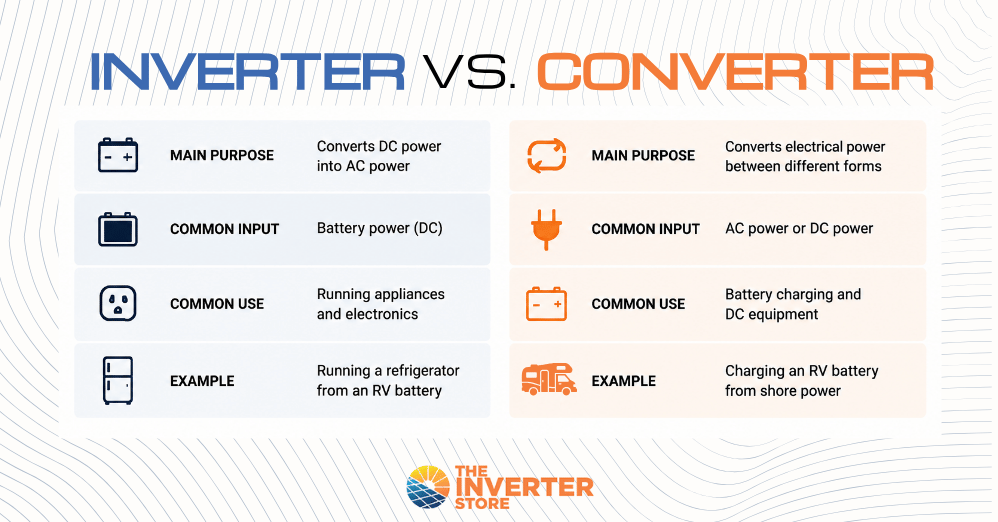
The biggest difference between an inverter and a converter is the direction of the power conversion.
An inverter takes DC power and turns it into AC power. This is what allows battery storage to power devices that normally plug into a wall outlet.
A converter changes electrical power into the form your system needs. In many cases, this means converting AC power into DC power for battery charging or adjusting DC voltage levels between components.
Power Conversion: DC to AC vs AC to DC
Knowing the difference between DC and AC power makes this much easier to understand.
Batteries store DC electricity, which flows in one direction. Most household appliances run on AC electricity, which alternates direction back and forth. An inverter converts DC to AC.
An inverter handles the DC-to-AC conversion. It takes energy stored in a battery bank and turns it into AC power for devices like a microwave, laptop charger, refrigerator, or television.
A converter typically handles AC-to-DC conversion and voltage level adjustments. It takes incoming AC electricity, such as shore power, and changes it into DC electricity for battery charging or DC equipment.
The two components may work together, but they are not interchangeable.
How They Work in an Electrical System
The easiest way to understand where each component belongs is to follow the power flow.
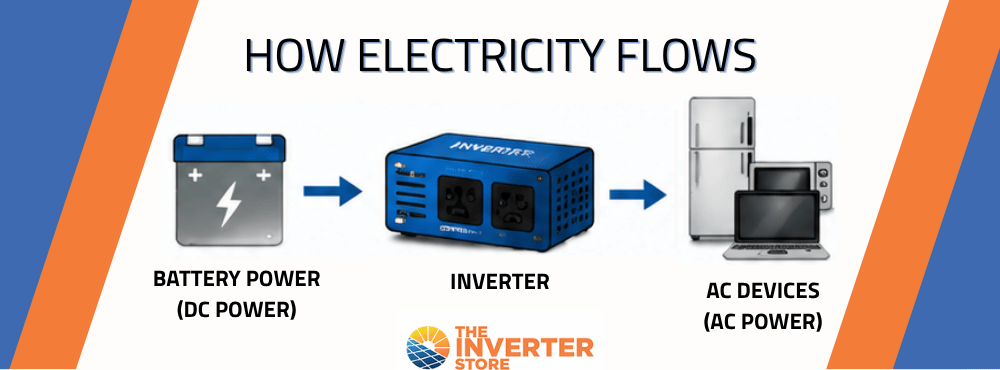
An inverter usually sits between your battery bank and AC devices. For example, an RV inverter allows you to use stored battery power to run appliances when you are camping without hookups or away from shore power.
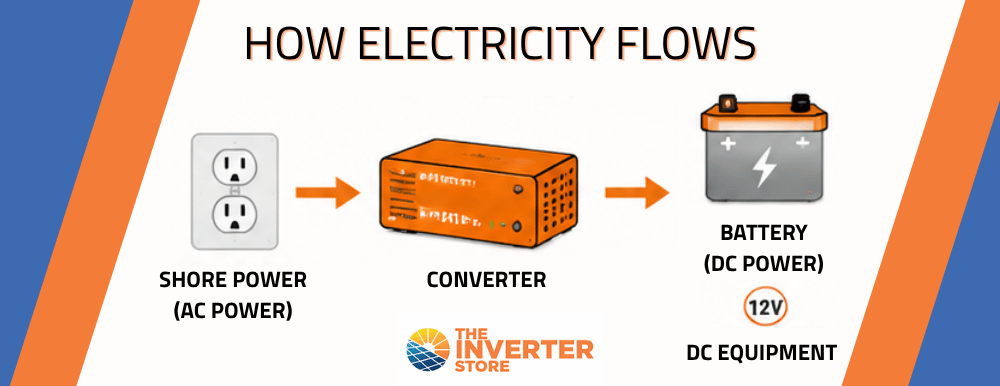
A converter works in another part of the system: When an RV is connected to shore power, the converter charges the battery bank and supplies DC power to equipment like lights, fans, and other onboard systems.
In a solar setup, the process may include both components. A solar panel creates DC power, batteries store that energy, and an inverter converts it into AC power for the devices you want to use.
Can You Use an Inverter and Converter Together?
Yes. Many RV and off-grid systems use both an inverter and converter because they solve different problems.
A converter keeps the battery charged when AC power is available. An inverter uses that stored battery power when you need AC electricity but do not have access to the grid.
Some systems combine both functions in one product. An inverter charger can charge batteries when connected to shore power and provide AC power from the battery when external power is unavailable.
Choosing Between an Inverter and Converter
The right choice depends on what you are trying to accomplish with your electrical system.
Run AC Devices
If you want to use battery power to run appliances, electronics, or tools, an inverter is the component you need.
This is why inverters are the first stop for off-grid power. It allows stored battery energy to run equipment that normally requires AC power.
For equipment like computers, medical devices, or other sensitive electronics, a pure sine wave inverter provides cleaner power that more closely matches what you get from a standard outlet.
Charge Batteries and Manage DC Power
A converter is used when you need to charge batteries, convert AC power into DC power, or adjust voltage levels between components.
For example, an RV connected to shore power may use a converter to charge the battery bank and keep DC equipment running.
Find the Right Power Solution
Choosing the right equipment starts with understanding how much power your system needs. Our power calculator can help you estimate your wattage requirements and determine the right inverter size for your setup.
For larger projects, The Inverter Store can help you build a system around your specific needs. If you are planning an RV, off-grid, or backup power setup, you can request a custom kit designed for your application.
Not sure where to start? Contact The Inverter Store for help selecting the right equipment for your power applications.
Frequently Asked Questions
Is an inverter the same as a converter?
No. An inverter and converter both change electrical power, but they do different jobs. An inverter converts DC power from a battery into AC power for appliances and electronics. A converter changes electrical power into the form a system needs, such as converting AC electricity into DC electricity for battery charging.
Can a converter replace an inverter?
No. A converter cannot replace an inverter because it does not turn battery power into the AC electricity needed for most household appliances and electronics. An inverter charger combines both functions in one unit, handling DC-to-AC conversion and battery charging from shore power.
Do I need an inverter or converter for an RV?
It depends on what you need to power. An RV converter charges the battery bank and powers DC equipment when connected to shore power. An RV inverter allows you to use battery power to run AC devices when shore power is unavailable.
Can I use an inverter and converter together?
Yes. Many RV and off-grid systems use both. The converter manages battery charging and DC power, while the inverter allows stored battery power to run AC devices.
What is the difference between a solar inverter and a power inverter?
A solar inverter is designed for solar energy systems and converts DC electricity from solar panels into AC power. A standard power inverter performs the same basic DC-to-AC conversion but can be used in applications like RVs, backup power, and off-grid systems.

Hi, your new upcoming grid tie 6500w inverter information states the all in one product is perfect for net metering. I am relatively new to solar technology, but am quite familiar with backup generators and auto/manual transfer switches. My question is ,,,,if i build my system with more than enough solar capacity to run everything i need and have excess electricity will your gridtied inverter feed my excess solar back into the grid?
It is designed as a grid tie inverter that can be used to “sell” power back to your power company. You will want to speak to your power company about their requirements for grid tie units before purchasing.