




The Short Answer: When comparing a lithium (LiFePO₄) vs lead acid battery, lithium batteries typically offer a longer lifespan, faster charging, lighter weight, and more usable capacity. Lead acid batteries remain a popular choice because they have a lower upfront cost and proven reliability. The best option depends on how often you use your system, how much power you need, and where the battery will be installed.
For RVs, solar systems, backup power, and off-grid applications, understanding the differences between these battery types can help you choose the solution that fits your needs. Battery capacity, depth of discharge, and cycle life all play a role in determining how well a battery performs over time. The right battery depends on factors like your power requirements, available space, charging setup, and how often the system will be used.
What Is a Lithium Battery?
A lithium battery (primarily referring to lithium iron phosphate, or LiFePO₄ batteries in this blog) uses lithium-based chemistry to store and deliver electrical energy. Compared to traditional lead acid batteries, lithium batteries provide several advantages, including higher energy density, longer cycle life, and faster charging.
For deep-cycle applications, lithium iron phosphate (LiFePO₄) batteries are a popular choice because they provide stable performance for systems that require frequent charging and discharging.
Many lithium batteries also include a battery management system that helps monitor battery performance and provides protection against issues like overcharging, excessive discharge, and temperature-related problems.
Benefits of Lithium Batteries
Lithium batteries are often chosen for applications that require:
- Longer battery life
- More charge cycles
- Faster charging
- Lower weight
- Higher usable capacity
- Better efficiency over longer periods of usage
What Is a Lead Acid Battery?
A lead acid battery uses lead plates and an electrolyte solution to store and deliver electrical energy. This proven battery technology has been used for decades and remains a reliable option for backup power, RV systems, and deep-cycle applications.
Common lead acid options include AGM batteries and sealed lead acid batteries. AGM batteries are a type of valve-regulated lead acid (VRLA) battery that provides dependable performance with minimal maintenance. Compared to lithium batteries, lead acid batteries provide a lower upfront cost and dependable performance for applications where frequent cycling and lightweight installation are less important.
Benefits of Lead Acid Batteries
Lead acid batteries are often chosen for applications that require:
- Lower upfront cost
- Reliable backup power
- Proven battery technology
- Simple installation
- Wide availability
- Dependable performance for occasional use
Key Differences Between Lithium and Lead Acid Batteries
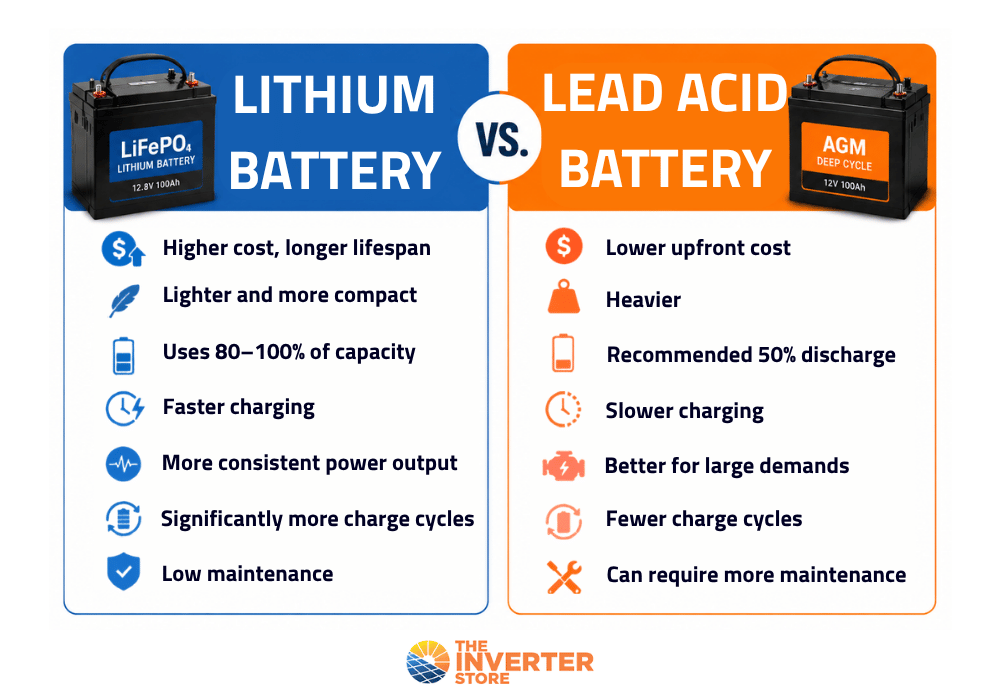
Lithium and lead acid batteries both store energy that can be used to power electrical systems, but they work differently and have different performance characteristics.
Performance and Efficiency
Lithium batteries generally provide higher efficiency and more usable power compared to lead acid batteries. They can typically be discharged deeper as well, allowing you to access more of the battery’s stored energy before recharging. This higher efficiency can help reduce wasted energy during charging and discharging, making lithium batteries a strong option for systems that rely on consistent power delivery.
Lead acid batteries have a more limited usable capacity because regularly draining them too far can reduce their lifespan. For applications that require frequent power usage, such as RVs, solar systems, and off-grid setups, lithium batteries can provide more consistent performance.
Lifespan and Cycle Life
One of the biggest advantages of lithium batteries is their longer cycle life. The number of charge cycles a battery can handle depends on factors like usage patterns, charging habits, and operating conditions.
A battery cycle refers to one complete charge and discharge process, and lithium batteries can typically handle significantly more cycles before their performance starts to decline.
Lead acid batteries are still reliable, but they generally have a shorter lifespan when used frequently or deeply discharged on a regular basis. For systems that are used every day, the longer lifespan of lithium can reduce the need for battery replacements over time.
Weight and Energy Density
Lithium batteries have a higher energy density, meaning they can store more energy while taking up less space and weighing less than comparable lead acid batteries.
This makes them especially useful for applications where size and weight matter, including RVs, marine systems, golf carts, and mobile power setups.
Lead acid batteries require more physical material to provide similar power output, making them heavier and often larger.
Charging Speed and Battery Capacity
Lithium batteries typically charge faster and can accept higher charging rates than lead acid batteries. This can be especially beneficial in systems that rely on solar panels or limited charging windows.
A solar charge controller compatible with lithium, lead acid, AGM, and gel batteries can help maintain a properly matched battery system. Matching your battery with the correct charging equipment is especially important for solar energy storage systems, where charging settings can affect battery efficiency and overall lifespan.
Battery capacity is another important consideration. While two batteries may have the same rated capacity, lithium batteries can often provide more usable energy because they support deeper discharge without the same impact on battery life.
Upfront Cost and Long-Term Value
Lead acid batteries usually have a lower upfront cost, making them a practical choice for users who need reliable power at a lower initial investment.
Lithium batteries typically cost more initially, but their longer lifespan, improved efficiency, lighter weight, and higher usable capacity can make them a better long-term investment.
The best choice depends on your application, how often you use your system, and the performance you need from your battery.
Which One Is Right for You?
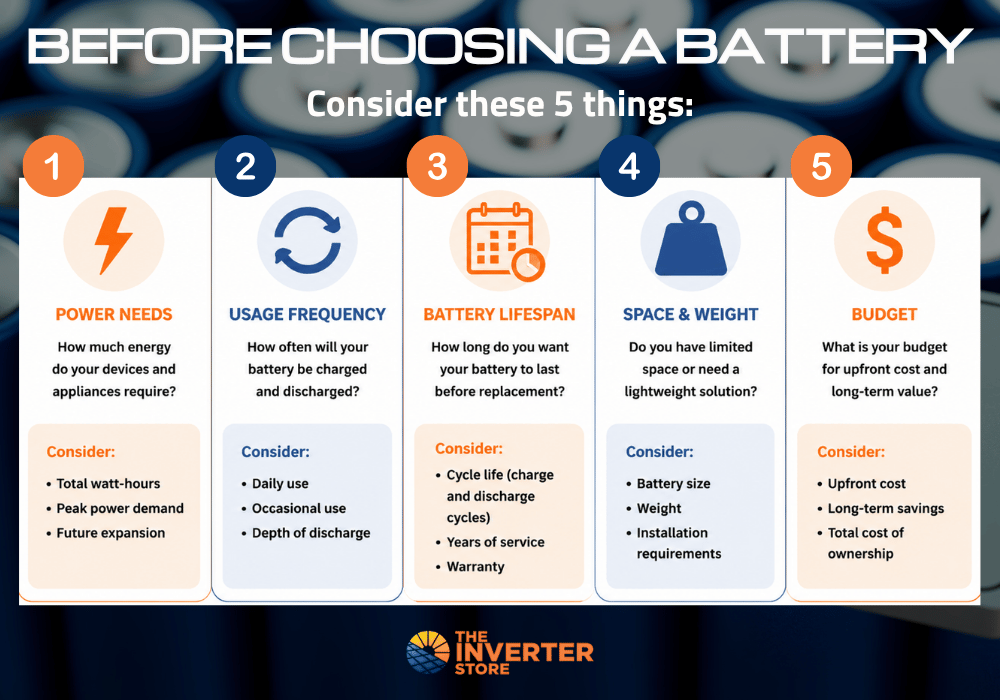
The best battery choice depends on how you plan to use your system.
Choose a Lithium Battery If You Need:
- Frequent charging and discharging
- Longer battery lifespan
- Lightweight installation
- Solar energy storage
- RV power
- Off-grid applications
Lithium batteries are especially useful for applications that require frequent cycling; their combination of longer cycle life, higher usable capacity, and lower weight makes them a popular choice when reliable battery performance is a priority.
Choose a Lead Acid Battery If You Need:
- A lower upfront cost
- Reliable backup power
- Occasional battery use
- A simple deep-cycle solution
- A stationary setup where extra weight won’t matter
Lead acid batteries can be a good fit for users who do not frequently cycle their battery or who want a more affordable option. Some lead acid batteries also provide a maintenance-free option for users looking for reliable performance in a sealed battery design.
Battery Temperature and Safety Considerations
Cold temperatures can affect charging and battery efficiency. Lithium batteries may require additional protection when charging in freezing temperatures, depending on the battery design. For cold-weather use, consider a lithium battery with cold weather features.
Extreme temperatures can also impact battery life and performance. Many lithium batteries designed for off-grid systems include a battery management system that helps monitor temperature, charging limits, and overall battery performance.
Build the Right Battery System
Choosing between a lithium and lead acid battery depends on your power requirements, available space, and how often your system will be used.
Whether you are building an RV setup, solar system, or off-grid power solution, The Inverter Store offers battery options designed for different applications and performance needs.
Not sure which battery type is right for your system? The Inverter Store can help you choose the right equipment and build a reliable power solution for your needs.
Frequently Asked Questions
Is lithium better than lead acid?
Lithium batteries typically offer longer lifespans, faster charging, lighter weight, and higher efficiency compared to lead acid batteries. Lead acid batteries remain a reliable option for users who need a lower upfront cost.
Are lithium batteries worth the extra cost?
For systems that are used frequently, lithium batteries can provide better long-term value because they last longer, charge faster, and provide more usable energy.
How long do lithium batteries last compared to lead acid batteries?
Lithium batteries generally provide more charge cycles than lead acid batteries, which means they typically last longer when used regularly.
Can I replace a lead acid battery with a lithium battery?
In many applications, a lead acid battery can be replaced with a lithium battery, but the charging system and equipment should be compatible with lithium technology. A solar charge controller compatible with lithium, lead acid, gel, and AGM batteries can help support a properly matched system.
Are lithium batteries better for RVs?
Lithium batteries are popular for RV applications because they are lightweight, efficient, and provide more usable power in a smaller package.
Which battery is better for solar systems?
Lithium batteries are often preferred for solar energy storage because they provide longer cycle life, faster charging, and more usable capacity. Lead acid batteries can still be a reliable option for smaller systems or applications where upfront cost is the main consideration.

Leave A Comment