



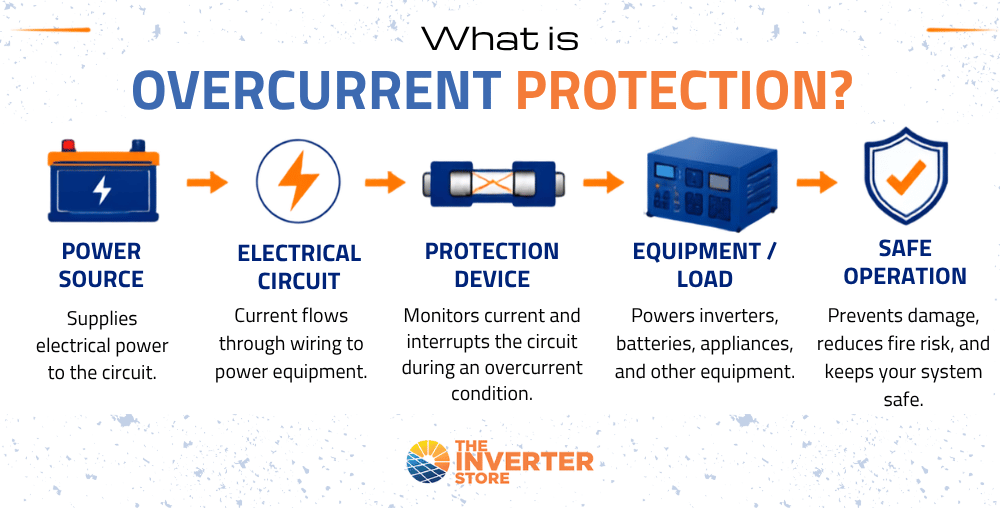
The Short Answer: Overcurrent protection prevents electrical systems and equipment from being damaged when more current flows through an electrical circuit than it can safely handle. An overcurrent protection device such as a fuse or circuit breaker helps protect against overloads, short circuits, and ground faults by interrupting current flow during an overcurrent condition.
Every electrical system has limits on how much current its components, wiring, and circuit conductors can safely handle. Proper fuse sizing ensures your system can handle normal operation while still protecting components during fault conditions. When current exceeds those limits, it can create excessive heat, damage electrical equipment, and cause system failures.
For inverters, batteries, RVs, and off-grid systems, selecting the right protective device is an important part of creating a safe and reliable power system.
What Is Overcurrent Protection?
How Overcurrent Happens
An overcurrent condition occurs when more current flows through an electrical circuit than the components are designed to handle. This can happen because of overloads, ground faults, short circuits, or other electrical faults.
Overloads
An overload occurs when equipment draws more current than the circuit is designed to support. For example, connecting too many high powered devices to the same circuit can create an excessive current load.
Short Circuits
A short circuit occurs when electricity finds an unintended path with very little resistance. This creates a sudden increase in fault current, which can damage wiring and electrical equipment and potentially start fires.
Ground Faults
A ground fault occurs when current flows through an unintended path to the ground. A person can become part of that path if they touch the energized surface, creating a shock hazard. Ground faults can also generate enough heat to start a fire. Ground fault protection helps disconnect power before damage or injury occurs.
Why Overcurrent Protection Matters
An overcurrent protection device helps control unsafe current levels by disconnecting the power before damage occurs. These protective devices provide overload protection for electrical systems by helping protect every component in the system, from the cables to the inverter.
In inverter and battery systems, protection is especially important because batteries can supply large amounts of current in a short period of time. Without proper DC circuit protection, a fault could damage anything connected to that circuit.
Types of Overcurrent Protection Devices
Different applications require different types of overcurrent devices depending on the electrical system, equipment being protected, current rating, and operating conditions. Common options include fuses, circuit breakers, and other circuit protection components.
Fuses
A fuse is one of the most common overcurrent protection devices used in electrical systems. Inside the fuse is a metal element designed to break the electrical circuit when current exceeds the fuse rating.
When excessive current flows through the fuse, that element melts and interrupts the circuit, protecting downstream components from damage caused by overloads and fault conditions.
Fuses are commonly used in inverter and battery systems because they provide fast protection against high-current events. They are often installed near the power source where fault current is highest.
When selecting a fuse, the fuse rating and current rating must match the requirements of the circuit. Factors like maximum current, current load, electrical power requirements, ampere rating, voltage rating, and system design should all be considered.
Circuit Breakers
A circuit breaker provides overcurrent protection by automatically opening the electrical circuit when it detects excessive current. Unlike a fuse, which must be replaced after it activates, many circuit breakers can be reset after the issue is resolved.
Circuit breakers are commonly used where easy access and repeated operation are important. They protect against overloads and short circuits while allowing the system to return to normal operation quickly after troubleshooting.
Protecting Your Inverter and Battery System
Where Overcurrent Protection Is Used
Overcurrent protection plays an important role in off-grid power systems. These systems often involve high-current connections where proper protection is vital. A protection device is typically installed near the power source to help protect the connections between your power source and your loads.
Common protection points include:
- Battery connections
- Inverters
- Solar equipment
- DC wiring
- Electrical loads
Protection Placement Matters
The location of an overcurrent protection device is just as important as selecting the correct fuse size.
Protection should be installed where it can quickly interrupt unsafe current and protect the components connected to the circuit. When building an RV, solar, or backup power system, consider the complete electrical setup, including every component from the battery to the final outlet.
For example, a fuse installed between a battery bank and inverter helps protect wiring and equipment in case a short circuit occurs.
How Fuse Sizing Works
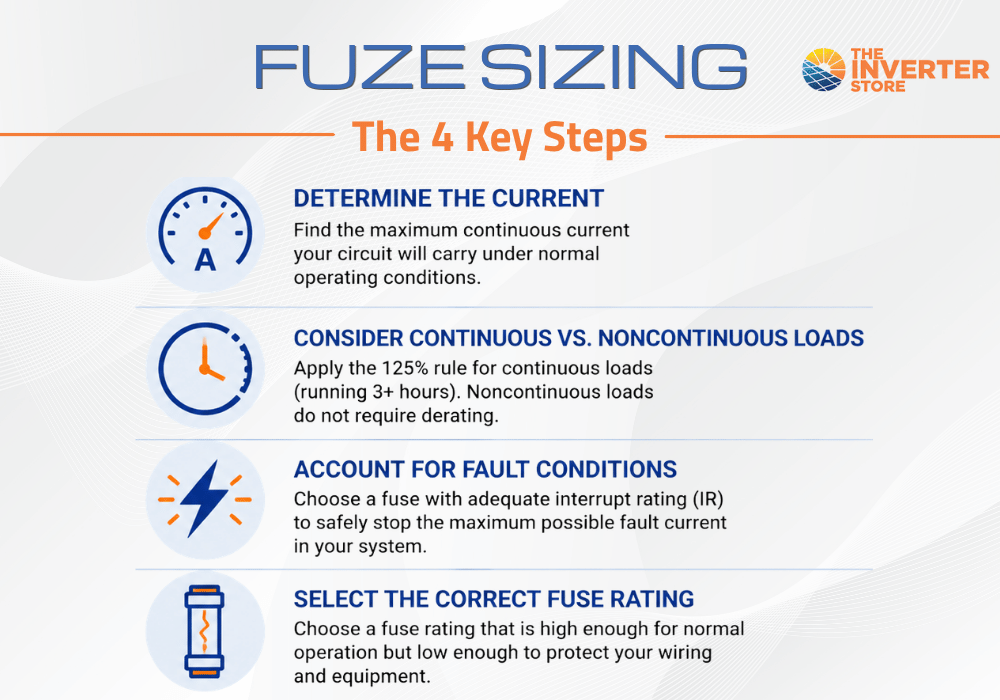
Proper fuse sizing helps protect equipment while allowing an electrical system to operate normally. The goal is selecting a fuse that can handle the expected load while still responding quickly if a fault occurs.
The correct fuse size depends on the equipment being protected, the wiring used, the necessary ratings, and the maximum current the circuit is expected to carry.
Determine the Current Rating
The first step in fuse sizing is understanding the current requirements of the circuit. Every electrical component has a current rating that indicates how much current it can safely handle.
For inverter and battery systems, this depends on factors such as
- Inverter size
- Battery voltage
- Connected equipment
- Cable capacity
- Expected electrical load
The fuse rating should protect the circuit without interrupting normal operation. Selecting a fuse based on the wrong current value or maximum current can lead to nuisance trips or insufficient protection.
Consider Continuous and Noncontinuous Loads
Some equipment operates for extended periods and creates a continuous load. Common continuous load examples include refrigerators, pumps, medical equipment, and other devices that run for long periods.
A noncontinuous load operates for shorter periods and may have different protection requirements. Common examples include microwaves, power tools, coffee makers, and hair dryers, which run for a few minutes at a time rather than continuously.
Environmental factors can also affect electrical components. Ambient temperature may impact how wiring and protection devices perform, making it another factor to consider when selecting the correct fuse size.
Account for Fault Conditions
A properly sized fuse must also respond quickly during fault conditions such as short circuits.
In battery-powered systems, the battery can provide significant fault current during a short circuit. The correct protection device interrupts that current before it damages anything downstream.
The purpose of fuse sizing is not to limit normal current flow. It is to provide protection when the electrical system experiences abnormal conditions.
Choosing the Right Overcurrent Protection
The right fuse depends on your electrical system, equipment requirements, and expected current flow. When selecting a fuse for an inverter, battery, or DC power system, consider factors like the fuse rating, current load, voltage requirements, and the equipment being protected.
A properly sized fuse helps protect electrical equipment during an overcurrent event while allowing the system to operate normally under expected conditions.
For inverter and battery applications, choosing the correct protection component helps safeguard everything between the battery and your loads from damage caused by excessive current. Keep in mind how the equipment operates during normal conditions rather than only looking at startup demands.
Before choosing components, use our power calculator to estimate the electrical load your system will need to handle.
Build the Right Protection for Your System
Choosing the right overcurrent protection depends on your equipment, power requirements, and system design. Whether you are building an RV setup, off-grid system, or backup power solution, each component needs to work together to create a safe and reliable electrical system.
Not sure where to start? The Inverter Store can help you choose the right equipment for your application and build a power system that fits your needs.
Frequently Asked Questions
What is overcurrent protection?
Overcurrent protection prevents electrical equipment and wiring from being damaged when more current flows through a circuit than it can safely handle. Fuses, circuit breakers, and other protective devices help interrupt excessive current caused by overloads, short circuits, and ground faults.
Why do I need a fuse for an inverter?
A fuse helps protect an inverter, battery bank, and wiring if a fault causes current to rise above safe levels. Because batteries can supply high amounts of current, proper protection is an important part of a safe inverter system.
How do I know what size fuse I need?
The correct fuse size depends on the equipment’s current rating, voltage, wiring capacity, and expected electrical load. Always consider the requirements of the specific electrical system before selecting a fuse.
What happens if a fuse is too large?
A fuse that is too large may not provide adequate protection during a fault condition. It may allow excessive current to continue flowing, damaging system components and introducing additional risk.
What is the difference between a fuse and a circuit breaker?
A fuse interrupts current by melting its internal element when the current exceeds its rating. A circuit breaker automatically disconnects power when it detects an overcurrent condition and can often be reset after the issue is resolved.
Where should a fuse be installed in an inverter system?
A fuse is typically installed near the battery connection to help protect the wiring and inverter from high-current faults. The exact placement depends on the system design and manufacturer recommendations.

Leave A Comment