



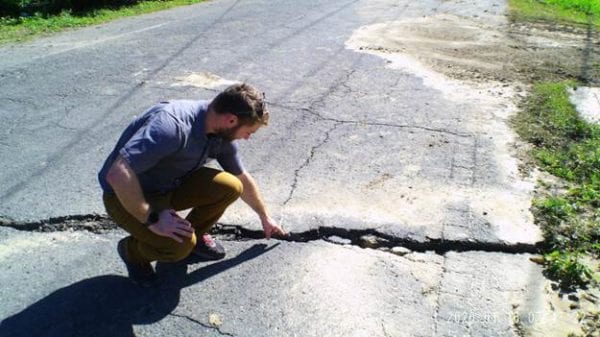
In the early morning hours on Tuesday, January 7, 2020, Puerto Rico was wakened by a magnitude 6.4 earthquake centered in Ponce, along the southern coast of the island. After subsequent aftershocks, another quake of magnitude 5.9 hit on Saturday, January 11, 2020, compounding the destruction of homes and other structures, including severe damage to a school.
High-intensity earthquakes are a somewhat new phenomenon to Puerto Rico, as fault lines underlying the island have been relatively inactive since 1918, when a 7.3-magnitude quake in the region killed over 100 people. But since last December, seismic activity has begun again. The timing of these recent devastating earthquakes is particularly unfortunate, as the island had not yet fully recovered from the tremendous damage caused by Hurricane Maria in 2017.
Catastrophic Loss of Power
The earthquake damage to a major power plant in southern Puerto Rico left hundreds of thousands of residents without power for days, and the Puerto Rico Electrical Power Authority (PRETA) has estimated it will take over a year to repair the plant. Although power has currently been restored, the country’s energy infrastructure is known to have been substandard for years, subject to frequent and ongoing outages. PRETA, for its part, has been struggling with bankruptcy, a disintegrating power infrastructure and backlash from shortages.
Not surprisingly, Puerto Rican citizens have been unsatisfied with the national response to their energy plight, especially since $8 billion in relief funds through the Department of Housing and Urban Development (HUD) had been delayed prior to the recent quakes. After the 2017 hurricanes, the private sector and NGO’s – including the Puerto Rico Community Foundation – had therefore taken it into their own hands to commence construction of solar power projects. The president of the foundation, Nelson Colón, says they’ve successfully installed four micro-grids in low-income areas, which now serve 64 communities. Colón states that solar panels are more resilient than traditional fossil fuel power plants during natural disasters.
Even before the quakes, Puerto Rico had an energy goal in place to convert to 100% renewable energy sources by 2050, and the above projects enacted by the private sector would indicate that solar power is an extremely viable energy option for this country. Still, lack of funds and political bureaucracy impediments make it unlikely that Puerto Rico will meet its 2050 goal in time.
The Capability to Make a Difference
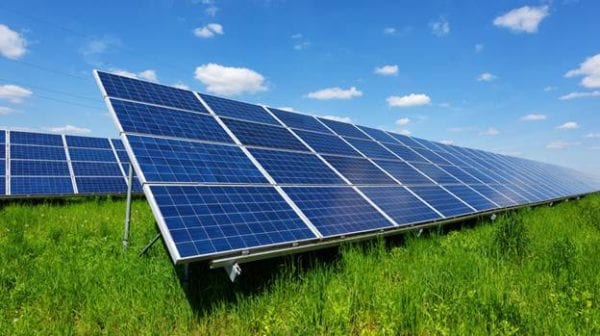
The Inverter Store has power-generating equipment and battery storage options fully capable of providing off-grid solutions and backup when needed during natural disasters. Our products are tailored to meet any type of need, from small to large. In places like Puerto Rico, it is already apparent that solar power has great potential to bring a steady supply of energy to large regions, independent of public utilities. The Inverter Store carries massive 3000+ Watt systems with over a dozen solar panels and matching batteries, which would be ideal for disaster-impacted areas in that county.
Our complete line of inverters, transfer switches, solar panel racks, solar charge controllers, solar panel cables and connectors, custom cut cables and other proprietary products are shipped free anywhere in the contiguous U.S., and at this time, we are extending free shipping to Puerto Rico as well. The current situation in this country is dire, but demonstrates the type of emergency that could be remedied by our top-of-the-line power products.

Leave A Comment